
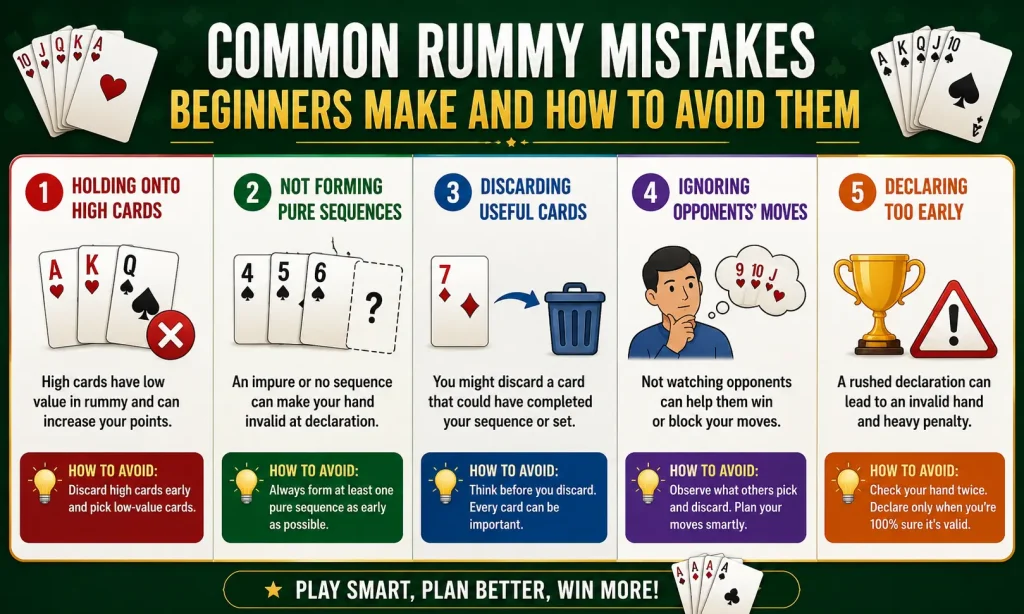
Rummy is one of the most popular card games enjoyed by millions of players worldwide. It combines skill, observation, strategy, and decision-making, making it both entertaining and mentally engaging. While the rules of Rummy are relatively simple to learn, mastering the game takes time and practice.
Many beginners enter a game of Rummy with enthusiasm but often struggle because they make common mistakes that reduce their chances of success. These mistakes may seem small at first, but they can have a significant impact on the outcome of a game. The good news is that most of these errors can be avoided with the right knowledge and approach.
In this guide, we will explore the most common Rummy mistakes beginners make and provide practical tips on how to avoid them. Whether you are completely new to the game or looking to improve your performance, understanding these mistakes can help you become a smarter and more strategic player.
Why Understanding Mistakes Matters in Rummy
One of the fastest ways to improve in Rummy is not just by learning winning strategies but also by identifying and avoiding losing habits.
Experienced players often win not because they receive better cards but because they make fewer mistakes. Every decision in Rummy matters, from choosing which card to pick to deciding what to discard.
By avoiding common beginner errors, you can:
- Improve your consistency
- Reduce unnecessary losses
- Build stronger hands
- Make better decisions under pressure
- Increase your chances of making valid declarations
Now, let’s look at the most common mistakes beginners make and how to avoid them.
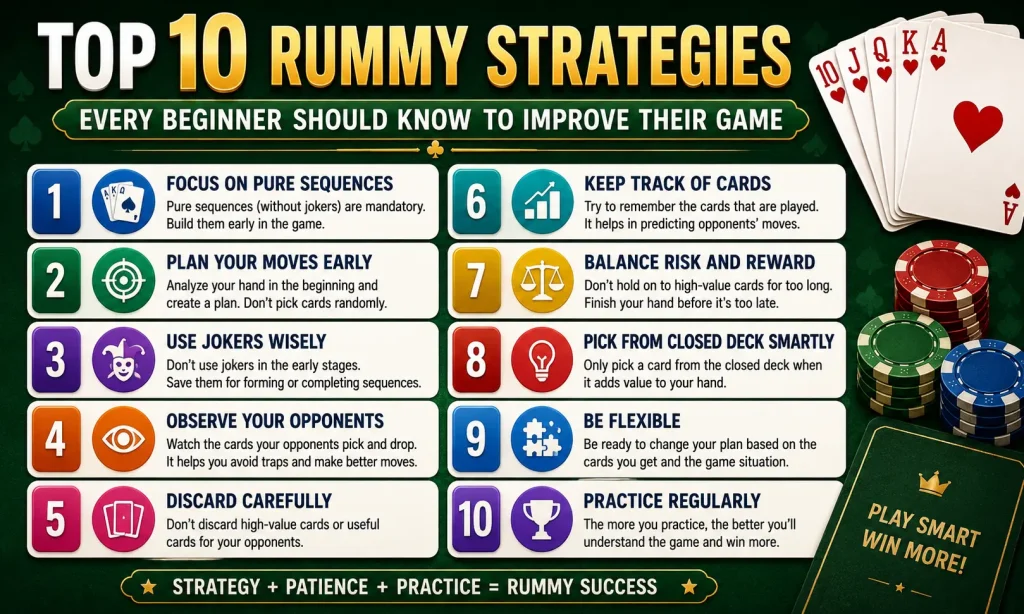
Top 10 Rummy Strategies Every Beginner Should Know to Improve Their Game
1. Ignoring the Importance of a Pure Sequence
One of the biggest mistakes beginners make is focusing on sets and other combinations before creating a pure sequence.
A pure sequence consists of three or more consecutive cards of the same suit without using a joker.
Example:
- 4♠, 5♠, 6♠
- 7♥, 8♥, 9♥
Without a pure sequence, your declaration will be invalid, regardless of how well your remaining cards are arranged.
Why Beginners Make This Mistake
Many players become excited about creating multiple sets and forget the mandatory pure sequence requirement.
How to Avoid It
Make forming a pure sequence your top priority from the beginning of every game.
Before focusing on anything else:
- Identify potential pure sequences.
- Keep useful connecting cards.
- Discard unrelated cards.
This simple habit can dramatically improve your performance.
2. Holding High-Value Cards for Too Long
Cards such as:
- Ace
- King
- Queen
- Jack
carry high penalty points if they remain unmatched when another player declares.
The Problem
Beginners often hold these cards because they hope to create useful combinations later.
Unfortunately, if an opponent declares unexpectedly, those cards can significantly increase your score.
Example
Imagine you are left with:
- King
- Queen
- Jack
These cards alone could add 30 points to your total.
How to Avoid It
Ask yourself:
“Is this card actively helping me create a sequence or set?”
If the answer is no, consider discarding it early.
Reducing risk is often more important than chasing unlikely combinations.
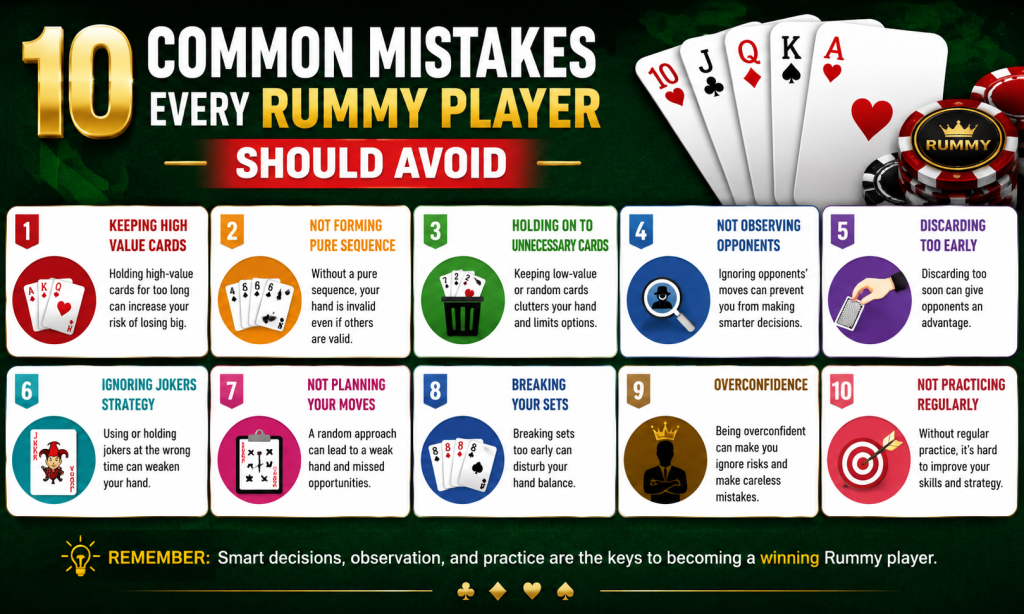
10 Common Mistakes Every Rummy Player Should Avoid
3. Misusing Jokers
Jokers are among the most valuable cards in Rummy.
However, beginners frequently use them inefficiently.
Common Joker Mistakes
- Using jokers in combinations that can be completed naturally
- Wasting jokers on low-value cards
- Using jokers too early
Example
Suppose you have:
- 5♦
- 6♦
- Joker
Using a joker here may not be necessary if you have a good chance of drawing 7♦.
How to Avoid It
Use jokers strategically.
Save them for:
- Difficult combinations
- Missing cards that are unlikely to appear
- High-value card groups
Smart joker usage often makes the difference between winning and losing.
4. Not Paying Attention to Opponents
Many beginners focus entirely on their own cards.
While your hand is important, ignoring your opponents can be a costly mistake.
What You Should Watch
- Cards picked from the open pile
- Cards discarded
- Repeated patterns
Why It Matters
Observing opponents helps you:
- Predict their strategy
- Understand their needs
- Avoid helping them complete combinations
How to Avoid It
Develop the habit of watching every move made at the table.
Even small clues can provide valuable information.
5. Picking Cards Without a Clear Plan
Some beginners pick cards simply because they seem useful.
This often leads to cluttered hands and confusion.
The Problem
Without a clear strategy:
- Your hand becomes disorganized.
- You chase too many combinations.
- Decision-making becomes difficult.
Example
A player picks:
- Random face cards
- Multiple unmatched middle cards
- Cards from different suits
Eventually, the hand becomes difficult to manage.
How to Avoid It
Every card you pick should support a specific objective.
Before picking a card, ask:
“How does this card improve my hand?”
If you cannot answer that question, it may not be worth taking.
6. Revealing Your Strategy Too Early
Your opponents are observing you just as closely as you are observing them.
Repeatedly picking certain cards from the open pile can reveal your plans.
Example
If you consistently pick heart cards, opponents may realize you’re building a heart sequence.
They can then avoid discarding useful cards.
How to Avoid It
Whenever possible:
- Use the closed deck.
- Avoid predictable behavior.
- Mix up your decisions.
Keeping your strategy hidden creates uncertainty for your opponents.
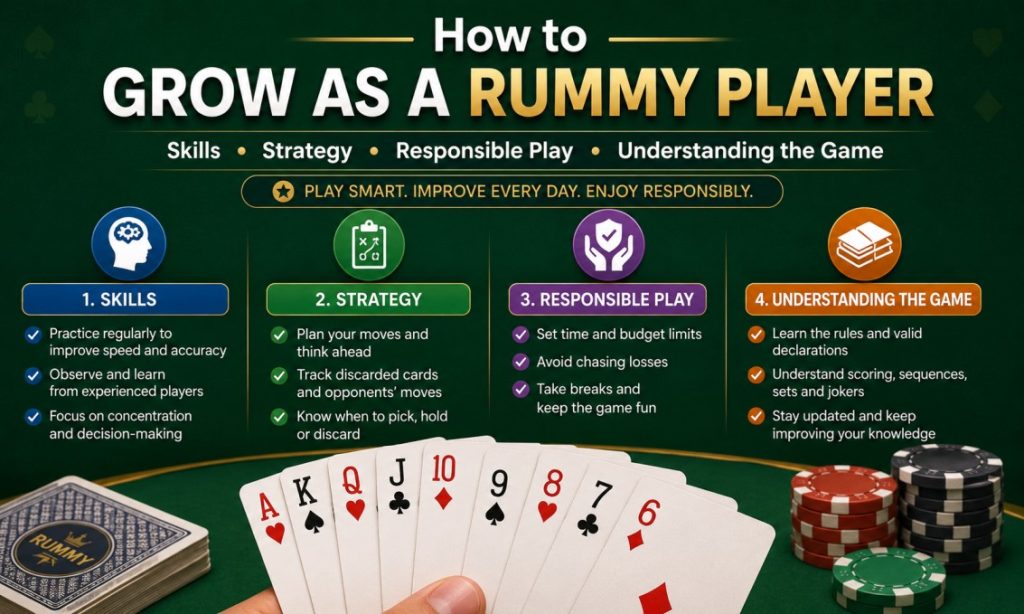
How to Grow as a Rummy Player: Skills, Strategy, Responsible Play, and Understanding the Game
7. Ignoring the Discard Pile
The discard pile contains valuable information.
Unfortunately, many beginners overlook it entirely.
Why This Is a Problem
You may continue chasing cards that have already been discarded.
This wastes time and reduces your chances of completing combinations.
Example
Suppose you need:
- 7♣
But you fail to notice that it has already been discarded.
You continue waiting for a card that is no longer available.
How to Avoid It
Track discarded cards throughout the game.
This helps you:
- Adjust your strategy
- Avoid impossible combinations
- Make smarter decisions
8. Breaking Existing Sequences
Some beginners break completed sequences in an attempt to create bigger combinations.
This can be extremely risky.
Example
You already have:
- 4♠, 5♠, 6♠
Then you decide to split it apart for another possibility.
If things do not work out, you may lose a guaranteed combination.
How to Avoid It
Once you have a strong sequence, especially a pure sequence, protect it.
Avoid breaking completed combinations unless there is a very strong reason to do so.
9. Making Emotional Decisions
Rummy rewards logical thinking, not emotional reactions.
Many beginners become frustrated after missing a card or seeing an opponent gain an advantage.
Common Emotional Reactions
- Panic discarding
- Aggressive card picking
- Rushed declarations
Why This Hurts Performance
Emotional decisions are usually less effective than strategic ones.
How to Avoid It
Stay calm.
Focus on:
- Probabilities
- Card combinations
- Long-term outcomes
Good decision-making comes from patience and discipline.
10. Declaring Too Early
Excitement often causes beginners to declare without carefully checking their cards.
This can result in an invalid declaration.
Consequences
An invalid declaration can lead to heavy penalties depending on the game format.
Common Errors
- Missing a pure sequence
- Incorrect grouping
- Incomplete combinations
How to Avoid It
Before declaring:
- Review all cards carefully.
- Verify sequence requirements.
- Double-check every combination.
A few extra seconds can save you from costly mistakes.

Rummy Bonus: Complete Guide to Online Rummy Bonuses in 2026
11. Chasing Too Many Combinations at Once
Another common beginner mistake is trying to complete multiple combinations simultaneously.
Example
A player attempts to build:
- Several sequences
- Multiple sets
- Alternative combinations
All at the same time.
Problem
This creates confusion and weakens focus.
How to Avoid It
Prioritize the most promising combinations.
Concentrate on:
- One pure sequence
- One additional sequence
- One or two strong supporting groups
Simplicity often leads to better results.
12. Underestimating the Value of Middle Cards
Cards like:
- 5
- 6
- 7
- 8
are often more flexible than face cards.
Why They’re Valuable
Middle cards can fit into multiple sequence possibilities.
Example
A 7♣ can connect with:
- 5♣, 6♣
- 6♣, 8♣
- 8♣, 9♣
How to Avoid the Mistake
Recognize the versatility of middle cards.
They often provide more opportunities than high-value cards.
13. Failing to Adapt
Some beginners stick to their original plan even when circumstances change.
Example
A required card has already been discarded.
Instead of adjusting, they continue waiting.
Why This Is Dangerous
Rummy is dynamic.
The game changes every turn.
How to Avoid It
Stay flexible.
If a combination becomes unlikely:
- Change your strategy.
- Build alternative groups.
- Focus on achievable goals.
Adaptability is a key skill in successful Rummy play.
14. Playing Too Fast
Speed is not always an advantage.
Many beginners make quick decisions without fully evaluating their options.
Consequences
- Missed opportunities
- Poor discards
- Incorrect card selections
How to Avoid It
Take your time.
Review:
- Current combinations
- Opponent actions
- Potential future moves
Careful decisions usually outperform rushed ones.
15. Neglecting Practice
Some players expect immediate success after learning the rules.
Like any skill-based game, improvement requires practice.
Why Practice Matters
Practice helps you:
- Recognize patterns faster
- Improve observation skills
- Develop strategic thinking
- Build confidence
How to Avoid This Mistake
Play regularly.
After each game, analyze:
- What worked
- What failed
- What could be improved
Continuous learning leads to long-term improvement.
Tips to Become a Better Rummy Player
To improve your game consistently:
Focus on Pure Sequences First
Always prioritize a valid declaration structure.
Observe Carefully
Watch both opponents and discard piles.
Manage Risk
Avoid unnecessary high-value cards.
Stay Flexible
Adapt when circumstances change.
Think Ahead
Plan several moves in advance whenever possible.
Learn From Experience
Every game offers valuable lessons.
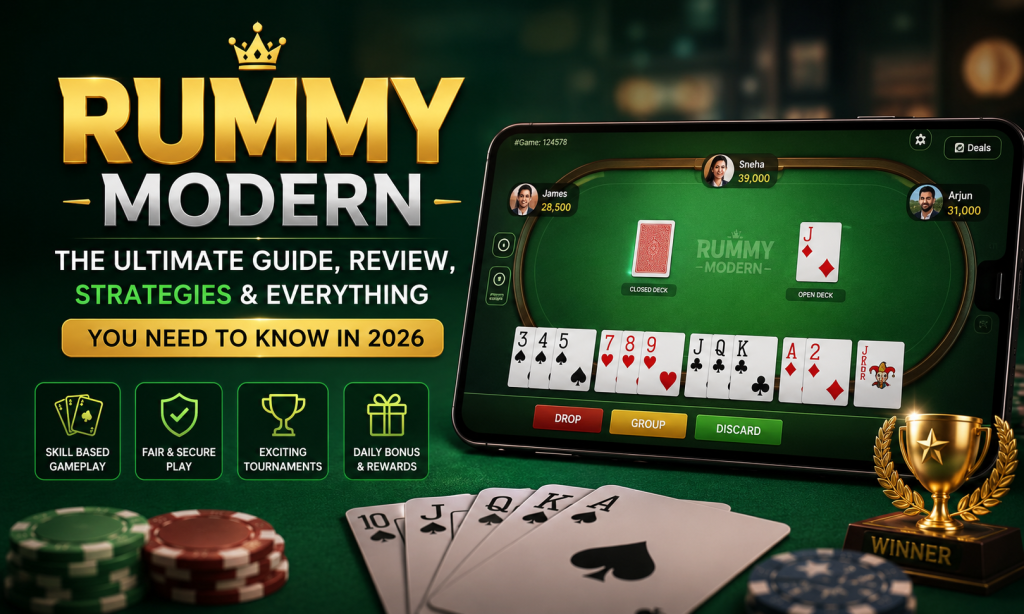
Rummy Modern: The Ultimate Guide, Review, Strategies & Everything You Need to Know in 2026
Conclusion
Rummy is a game of strategy, observation, patience, and smart decision-making. While beginners often focus on creating combinations, experienced players understand that avoiding mistakes is just as important as making good moves.
Common errors such as ignoring pure sequences, holding high-value cards too long, misusing jokers, revealing strategy, and making rushed decisions can significantly reduce your chances of success. Fortunately, these mistakes are easy to correct once you become aware of them.
By applying the tips discussed in this guide, you can build stronger habits, make better decisions, and steadily improve your performance. Remember that becoming a skilled Rummy player is a gradual process. Every game is an opportunity to learn, adapt, and refine your strategy.
The more you practice and avoid these common mistakes, the more confident and successful you will become at the Rummy table.
The most common mistake is ignoring the importance of forming a pure sequence early in the game.
High-value cards carry significant penalty points if they remain unmatched when another player declares.
Use jokers for difficult combinations and important groups rather than wasting them on easily completed sequences.
Yes. Watching opponents helps you understand their strategy and avoid giving them useful cards.
Not necessarily. Repeatedly picking from the open pile may reveal your strategy to opponents.
It helps you identify which combinations are still possible and prevents you from chasing unavailable cards.


Leave a Reply